



The Complete Guide to EPS Packaging: How Expanded Polystyrene Protects Products During Shipping
July 28, 2026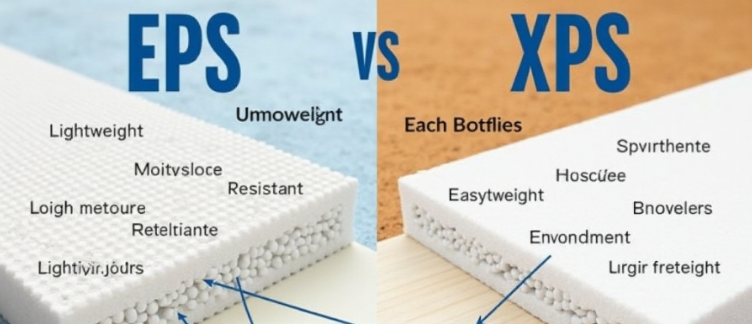
When planning a construction, renovation, or insulation project, choosing the right insulation material is one of the most important decisions you can make. Proper insulation can help improve thermal comfort, reduce energy consumption, protect building structures, and contribute to long-term durability. Among the most commonly used insulation materials are XPS boards and EPS sheets.
Both XPS and EPS are made from polystyrene and are widely used in residential, commercial, and industrial applications. However, they have different structures and performance characteristics that make each material suitable for specific situations.
Understanding the difference between XPS and EPS insulation can help architects, contractors, builders, and property owners select the right solution for their individual requirements.
In this guide, we will compare XPS and EPS insulation boards, explore their advantages and applications, and explain how to determine which material may be best suited for your project.
What Is XPS Insulation?
XPS stands for Extruded Polystyrene. It is a rigid insulation material manufactured through an extrusion process that creates a closed-cell structure.
The closed-cell structure gives XPS boards several useful properties. They are generally known for their good thermal insulation performance, moisture resistance, strength, and durability.
XPS boards are often available in different thicknesses and can be used in areas where insulation needs to withstand environmental exposure or mechanical pressure.
Because of their structure, XPS boards are commonly used in construction projects involving walls, roofs, floors, foundations, and other areas where reliable thermal insulation is required.
One of the major advantages of XPS is its relatively low water absorption compared with many other insulation materials. This makes it particularly useful in applications where moisture may be a concern.
What Is EPS Insulation?
EPS stands for Expanded Polystyrene. Unlike XPS, EPS is manufactured by expanding small polystyrene beads and molding them into blocks or sheets.
The resulting material is lightweight and provides effective thermal insulation. EPS is widely used in construction because it offers a practical balance between insulation performance, weight, ease of handling, and cost.
EPS sheets can be used in walls, roofs, floors, and other building applications. The material is also commonly used in packaging because of its lightweight structure and cushioning properties.
EPS is available in different densities and thicknesses, allowing manufacturers and contractors to select products according to the specific requirements of a project.
XPS vs EPS: Understanding the Main Difference
Although both materials are made from polystyrene, their manufacturing processes create differences in their physical structures.
XPS has a more uniform closed-cell structure, while EPS consists of expanded beads that are molded together.
This difference can affect properties such as moisture resistance, compressive strength, thermal performance, and suitability for particular applications.
The right choice depends on the conditions in which the insulation will be installed.
Thermal Insulation Performance
Both XPS and EPS can provide effective thermal insulation.
The exact performance depends on factors such as density, thickness, product specifications, installation quality, and environmental conditions.
XPS is often selected for applications where consistent thermal performance is important, particularly in areas exposed to moisture or pressure.
EPS also provides effective insulation and is widely used for building envelopes and general construction applications.
When comparing insulation products, it is important not to focus only on the material name. Always consider the manufacturer’s technical specifications and the required thermal resistance for the project.
Moisture Resistance
Moisture resistance is an important factor when choosing insulation.
XPS’s closed-cell structure generally provides strong resistance to water absorption. This can make it suitable for areas such as foundations, below-grade walls, and other locations where exposure to moisture is possible.
EPS can also be used in various moisture-related applications, but its performance depends on the density and specific product design.
If the insulation will be installed in an environment with significant moisture exposure, choosing the appropriate product specification is essential.
Strength and Durability
Insulation materials may be exposed to pressure during installation or throughout the life of a building.
XPS is known for its compressive strength and is often used in applications where the insulation needs to support loads or withstand pressure.
EPS is lightweight and can also provide good structural performance when the appropriate density is selected.
For floors, foundations, and other load-bearing applications, contractors should consider the compressive strength requirements before selecting an insulation product.
Cost Considerations
Cost is another important factor when selecting insulation.
EPS is often considered a cost-effective insulation solution, making it popular for large construction projects where material efficiency and budget are important.
XPS may have a higher initial cost in some applications, but its moisture resistance and durability can make it a valuable choice where performance requirements are more demanding.
The cheapest material is not always the most economical choice in the long term. Consider the total cost of the project, including installation, maintenance, energy efficiency, and expected service life.
Applications of XPS Boards
XPS boards can be used in a variety of construction applications, including:
- External and internal wall insulation
- Floor insulation
- Roof insulation
- Foundation insulation
- Basement insulation
- Below-grade applications
- Cold storage environments
- Areas requiring moisture-resistant insulation
Their combination of thermal performance, strength, and moisture resistance makes them suitable for demanding environments.
Applications of EPS Sheets
EPS sheets are widely used in:
- Wall insulation
- Roof insulation
- Floor insulation
- Ceiling insulation
- Building envelope systems
- Decorative construction applications
- Packaging and protective products
EPS is particularly attractive for projects where lightweight insulation and cost efficiency are important.
Which Is Better: XPS or EPS?
There is no universal answer to whether XPS or EPS is better.
The best choice depends on your project’s requirements.
If your project requires strong moisture resistance and high compressive strength, XPS may be a suitable option.
If your project prioritizes lightweight construction, cost efficiency, and versatile insulation applications, EPS may be a practical solution.
Other factors, such as local climate, building design, installation method, and regulatory requirements, should also be considered.
Choosing the Right Insulation Thickness
The thickness of insulation plays an important role in thermal performance.
A thicker board can generally provide greater insulation, but the appropriate thickness depends on the building design and required performance.
Before purchasing insulation, consult project specifications and applicable building requirements. A professional contractor or insulation specialist can help determine the appropriate thickness and product type.
Why Professional Product Selection Matters
Choosing insulation based only on price or appearance can result in poor performance.
Professional suppliers can help customers understand product specifications, densities, dimensions, and intended applications.
It is also important to ensure that insulation is installed correctly. Even a high-quality product may not perform as expected if there are gaps, poor joints, or incorrect installation methods.
Final Thoughts
XPS and EPS are both valuable insulation materials with different characteristics and applications.
XPS boards are often preferred where moisture resistance, durability, and compressive strength are important. EPS sheets offer a lightweight and versatile solution that can be suitable for many construction and insulation applications.
The best insulation material depends on your project’s specific needs, environmental conditions, budget, and performance requirements.
By understanding the differences between XPS and EPS, you can make a more informed decision and select an insulation solution designed to improve comfort, efficiency, and long-term building performance.
Whether you are working on a residential property, commercial development, industrial facility, or renovation project, choosing the right insulation from the beginning can make a significant difference to the overall success of your project.

